

Jordan B. Peterson
Himself
Series
No video is available for Maps of Meaning: The Architecture of Belief - S1E1 yet. Check back soon.
Synopsis
This lecture series lays bare the grammar of mythology, and describes the relevance of that grammar for interpretation of narrative and religion, comprehension of ideological identification and understanding of individual choice.
Episodes
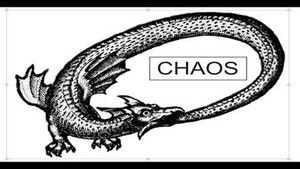 1. Context and BackgroundNow viewing2017-01-162h 31mIn this lecture, I discuss the context within which the theory I am delineating through this course emerge: that of the cold war. What is belief? Why is it so important to people? Why will they fight to protect it? I propose that belief unites a culture's expectations and desires with the actions of its people, and that the match between those two allows for cooperative action and maintains emotional stability. I suggest, further, that culture has a deep narrative structure, presenting the world as a forum for action, with characters representing the individual, the known, and the unknown -- or the individual, culture and nature -- or the individual, order and chaos.
 2. Marionettes and Individuals (Part 1)2017-01-252h 23mIn this lecture, I begin using a particular piece of dramatic art -- the Disney film Pinocchio -- to provide a specific example of the manner in which great mythological or archetypal themes inform and permeate narrative.
 3. Marionettes and Individuals (Part 2)2017-01-302h 26mIn this lecture, I continue with the analysis of the Disney film Pinocchio to illustrate the manner in which great mythological or archetypal themes inform and permeate both the creation and the understanding of narratives.
 4. Marionettes and Individuals (Part 3)2017-02-082h 12mIn this lecture, I conclude my analysis of the Disney film Pinocchio, which I conducted to illustrate how archetypal/mythological themes permeate popular culture.
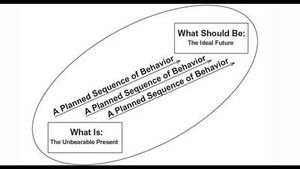 5. Story and Metastory (Part 1)2017-02-132h 22mIn this lecture, I make the case that we each inhabit a story, describing where we are, where we are going, and the actions we must undertake to get from the former to the latter. These inhabited stories are predicated on an underlying value system (as we must want to be where we are going more than we value where we are). In addition, they are frames of reference, allowing us to perceive (things that move us along; things that get in our way), make most of the world irrelevant (things that have no bearing on our current frame), and determine emotional significance (positive: things that move us along; negative: things that get in our way).
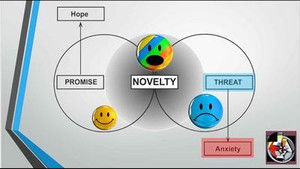 6. Story and Metastory (Part 2)2017-02-202h 27mIn this lecture, I discuss uncertainty, or anomaly. We frame the world -- or the world reveals itself to us -- as a story, with a starting point, a destination, and the behavioral means to move from one to the other. The destination is valued more highly than the starting point, and constitutes the point of the story -- the aim of the individual. Reality manifests itself within that story as what is relevant for forward movement, what gets in the way, and what is irrelevant and can be safely ignored. The largest category, by far, is the latter. Unfortunately, sometimes what has been happily classified as irrelevant rears up and gets in the way. That's a manifestation of chaos. Chaos can undermine the story, or break the frame. The degree of undermining or breakage is proportional to the time and space over which the story in question extends its operations.
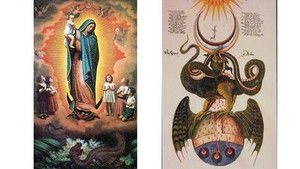 7. Images of Story and Metastory2017-03-062h 11mIn this lecture, I discuss how the basic or archetypal categories we use to frame the world are represented in image, where they existed long before their nature could be articulated. These categories include the individual (hero/adversary), culture (wise king/tyrant), and nature (destruction/creation). The heroic individual (the knower) is typically masculine, as is culture (the known), while the unknown is feminine. These categories can be conceptualized, as well, as explorer, explored territory, and unexplored territory. The most abstract category is the dragon of chaos, the monster who guards what is most valuable. It is from this most primordial of categories that the other three emerge. Our existence as prey and predator is reflected in the ambivalent representation of the absolute unknown.
 8. Neuropsychology of Symbolic Representation2017-03-082h 21mIn this lecture, I discuss the relationship between the basic categories of imagistic/symbolic representation and brain function, noting that the very hemispheres of the brain are adapted, right/left to the environmental or experiential permanence of chaos/order or unexplored/explored territory, with consciousness serving the Logos role of communicative explorer (a function related in one of its deepest manifestations to the function of the hypothalamically grounded dopaminergic systems).
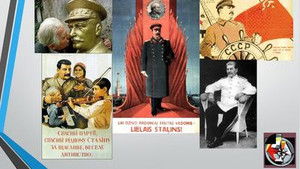 9. Patterns of Symbolic Representation2017-03-292h 16mIn this lecture, I discuss the manner in which the fundamental symbolic archetypes (particularly those dealing with the Wise King and Tyrant) are hijacked for the purposes of propaganda. Ideologies are parasites. Their hosts are archetypes. Knowledge of the underlying archetypes can produce immunity against ideological possession.
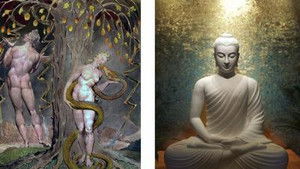 10. Genesis and the Buddha2017-04-272h 18mIn this lecture, I discuss the creation stories in Genesis, the first book of the Bible, and describe the parallels with the stories of the development of the Buddha from childhood to early adulthood, using the archetypal schema developed previous in the course.
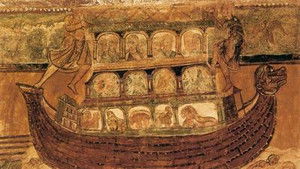 11. The Flood and the Tower2017-05-012h 32mIn this lecture, I continue my discussion of the archaic stories at the beginning of Genesis, including Cain and Abel, and the flood story of Noah (the return of chaos), and the story of the Tower of Babel (which I am reading as a very old warning about the danger of erecting something akin to a totalitarian/utopian secular state -- so that is pathological order).
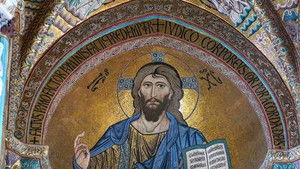 12. Final: The Divinity of the Individual2017-05-272h 25mIn this, the final Maps of Meaning lecture for 2017, I review the year and its offerings: What is a belief system? Why are people so inclined to engage in conflict to protect their belief systems?
Cast
Himself
Availability
No legal streaming, rental or purchase options for Maps of Meaning: The Architecture of Belief were reported for this region.
Recommended
 Series
 Series
 Series
 Series
 Series
 Series
 Series
 Series
 Series
 Series
 Series
 Series
 Series
 Series
 Series
 Series
 Series
 Series
 Series
 Series
FAQ
Vidbox does not currently have a legal streaming, rental or purchase option on record for Maps of Meaning: The Architecture of Belief in this region.
Maps of Meaning: The Architecture of Belief has 1 season and 12 episodes.
Maps of Meaning: The Architecture of Belief first aired in 2017.
Maps of Meaning: The Architecture of Belief's status on TMDB is: Ended.